Made for the room where the day actually starts
Stoneware, cast iron, linen and wood — chosen one piece at a time and tested past the point where we are bored of testing. Everything ships free, duties already paid.
1–3
Days to dispatch
0
Shipping cost
30 days
To change your mind
Ships free worldwideNo minimum spend
Duties includedNothing extra on delivery
What we make
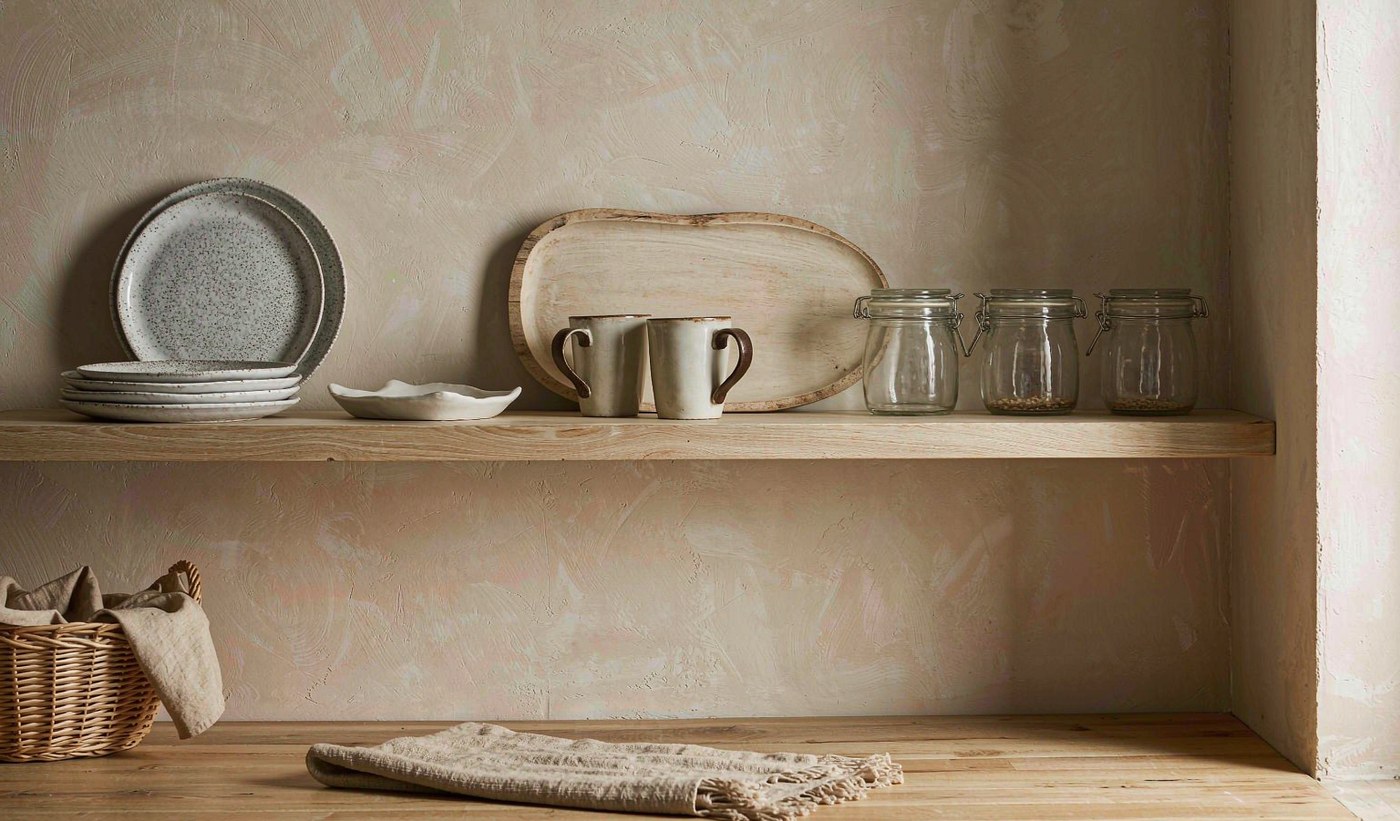
Stoneware, cast iron, linen, oak
Four materials, picked because they survive being used badly: burnt, soaked, dropped, left in the sink overnight. Shape and glaze come after — whatever the material will actually put up with.
- StonewareFired to 1,240 °C so the glaze fuses into the clay body. Dishwasher, oven and microwave; the speckle is iron coming through, not a print that can wash off.
- Enamelled cast ironPoured in one piece with no seam to leak. Heavy enough to hold heat through a long braise, and still liftable with one hand when it is full.
- Flax linenWashed before it ships, so it softens the more you use it instead of shrinking on you the first time it meets hot water.
- Oak and woolOiled, not lacquered. Undyed where we can manage it. Both are chosen to age — a scratch or a pill is not the end of the piece.
Why HOME & COOK
Four things we hold every piece to
No invented ratings, no discount theatre, and the downsides printed on the page.
Fired, not painted
Every glaze is fired at 1,240 °C until it fuses with the clay. The speckle you see is iron in the body showing through, so it cannot wear off in the wash.
Small runs, made once
We order a few hundred of a piece at a time from workshops we have visited. When a run sells out we re-order the same thing — no seasonal churn to force you back.
Materials we can name
Stoneware, flax linen, enamelled cast iron, wool with no synthetic blend. If we cannot tell you what is in it, it does not go on the site.
The downsides are on the page
If a piece cannot go in the dishwasher, or weighs more than you expect, that fact sits at the top of its page — before the buy button, not in a footnote.
Our promise
What we do differently
We launched in 2026, so there is not much track record to show you yet. Here is what you can hold us to instead.
01
Reviews appear when they are real
You will not find four thousand five-star ratings on this site. When a buyer leaves feedback it shows up here, with the date and the piece they bought.
02
One price, no theatre
The price on the page is the price every day. No crossed-out figure to make it look like a bargain, no countdown that resets when you refresh.
03
Shipped free, duties included
There is no threshold to chase and no shipping line at checkout. The number you see on the product page is the number you pay, delivered.
How it gets here
Four steps between a workshop and your kitchen
There is no buyer flying out twice a year to pick from a catalogue. This is the whole process, in order.
-
01
Find a workshop we can stand in
We buy from places we have visited. If nobody will let us see the kiln, the foundry or the loom, the piece does not get listed.
-
02
Use it for three months first
Every candidate goes into a real kitchen — ours, then two households that cook more than we do. Most of them fail here, and that is the point.
-
03
Write down what it does badly
Weight, wash instructions, the thing that starts to annoy you by week six. That paragraph sits on the product page, above the buy button.
-
04
Order a few hundred, then repeat
Small runs from the same workshop, re-ordered identically. No seasonal colourway to make last year’s version look tired.
What we won’t do
The short list
Every store says it sells quality. Here is the smaller, checkable version of that claim.
- No “only 3 left” unless the warehouse actually says so.
- No product listed before we have lived with it for three months.
- No plastic in the box. Paper tape, moulded pulp, recycled card — even when it costs more.
- No seasonal drops. When a run sells out, we make the same piece again.
- No claim we cannot show you. “Dishwasher safe” means it has been through two hundred cycles.